B2B marketing is no longer about simply sending sales emails or placing advertisements in front of other businesses. Today, companies need a clear strategy to reach the right decision-makers, build trust, demonstrate expertise and turn interest into long-term business relationships.
Whether you are a small service provider, technology company, manufacturer or growing B2B brand, an effective B2B marketing strategy can help you generate qualified leads and create a more predictable sales pipeline.
What Is B2B Marketing?
B2B Marketing (business-to-business marketing) is the process of promoting products or services to other businesses rather than individual consumers. The goal is to attract organisations, business owners, procurement teams, managers and other decision-makers who may need your solution.
Unlike B2C marketing, where customers may make relatively quick purchasing decisions, B2B buying journeys can involve multiple people, larger budgets and several stages of research.
For example, a business looking for accounting software may compare different providers, read reviews, check case studies, request a demonstration and discuss the purchase internally before making a decision.
This is why successful B2B marketing focuses on education, credibility, relationships and measurable results.
Why Is B2B Marketing Important?
A strong B2B marketing strategy helps businesses become visible when potential customers are actively looking for solutions.
Without marketing, even an excellent B2B product or service can remain unknown. With the right approach, businesses can build brand awareness, attract relevant website visitors and generate leads that are more likely to become customers.
Some key benefits include:
- Increased brand awareness within your target industry
- More qualified B2B leads
- Stronger relationships with potential customers
- Better visibility in search engines
- Improved customer engagement
- A healthier sales pipeline
- Greater long-term return on marketing investment
The biggest advantage is consistency. Instead of relying entirely on referrals or cold outreach, your business can create multiple channels that continuously attract potential customers.
Key B2B Marketing Strategies
There is no single formula that works for every B2B company. The best strategy combines several channels based on your audience, industry, goals and buying journey.
1. Search Engine Optimisation
SEO is one of the most valuable long-term channels for B2B companies.
Potential customers often search Google before contacting a supplier or service provider. Optimising your website for relevant commercial and informational keywords can help your business appear at the right moment.
A strong B2B SEO strategy can include:
- Keyword research
- Technical SEO
- On-page optimisation
- Service and industry pages
- Content marketing
- Internal linking
- Local SEO where relevant
- Digital PR and link building
Instead of targeting only broad keywords, businesses should also focus on specific phrases that indicate commercial intent.
2. Content Marketing
B2B buyers want answers before they want a sales pitch.
Content marketing allows your company to demonstrate knowledge while helping potential customers solve real problems. Useful content can include blog posts, guides, case studies, industry reports, comparison pages and FAQs.
For example, a cybersecurity company could publish content explaining common security risks, while an industrial manufacturer could create guides about choosing the right components.
High-quality content can support both SEO and lead generation, making it an important part of modern B2B digital marketing.
3. LinkedIn Marketing
LinkedIn is particularly valuable for B2B businesses because professionals and decision-makers are already active on the platform.
Companies can use LinkedIn to share industry insights, company updates, case studies, educational content and customer success stories.
LinkedIn advertising can also help businesses reach specific professional audiences based on factors such as industry, job role, company size and location.
The key is to avoid making every post a sales pitch. Useful, credible content generally creates stronger engagement and trust.
4. Email Marketing
Email marketing remains an effective way to nurture B2B leads.
Not every visitor is ready to buy immediately. Some may need additional information before contacting your sales team. Email campaigns can keep your business visible while providing useful content and relevant offers.
A B2B email marketing strategy might include:
- Welcome emails
- Educational newsletters
- Product updates
- Case studies
- Industry insights
- Follow-up campaigns
- Lead nurturing sequences
Personalisation is particularly important. A message written for a procurement manager should not necessarily be the same as one sent to a company director.
5. Paid Search and B2B Advertising
Paid advertising can help businesses reach potential customers more quickly than organic channels alone.
Google Ads, LinkedIn Ads and other paid media platforms can be used to target audiences based on search intent, professional characteristics, interests and other signals.
However, successful B2B advertising requires more than simply increasing the advertising budget. Campaigns should have clear targeting, compelling landing pages, relevant messaging and measurable conversion goals.
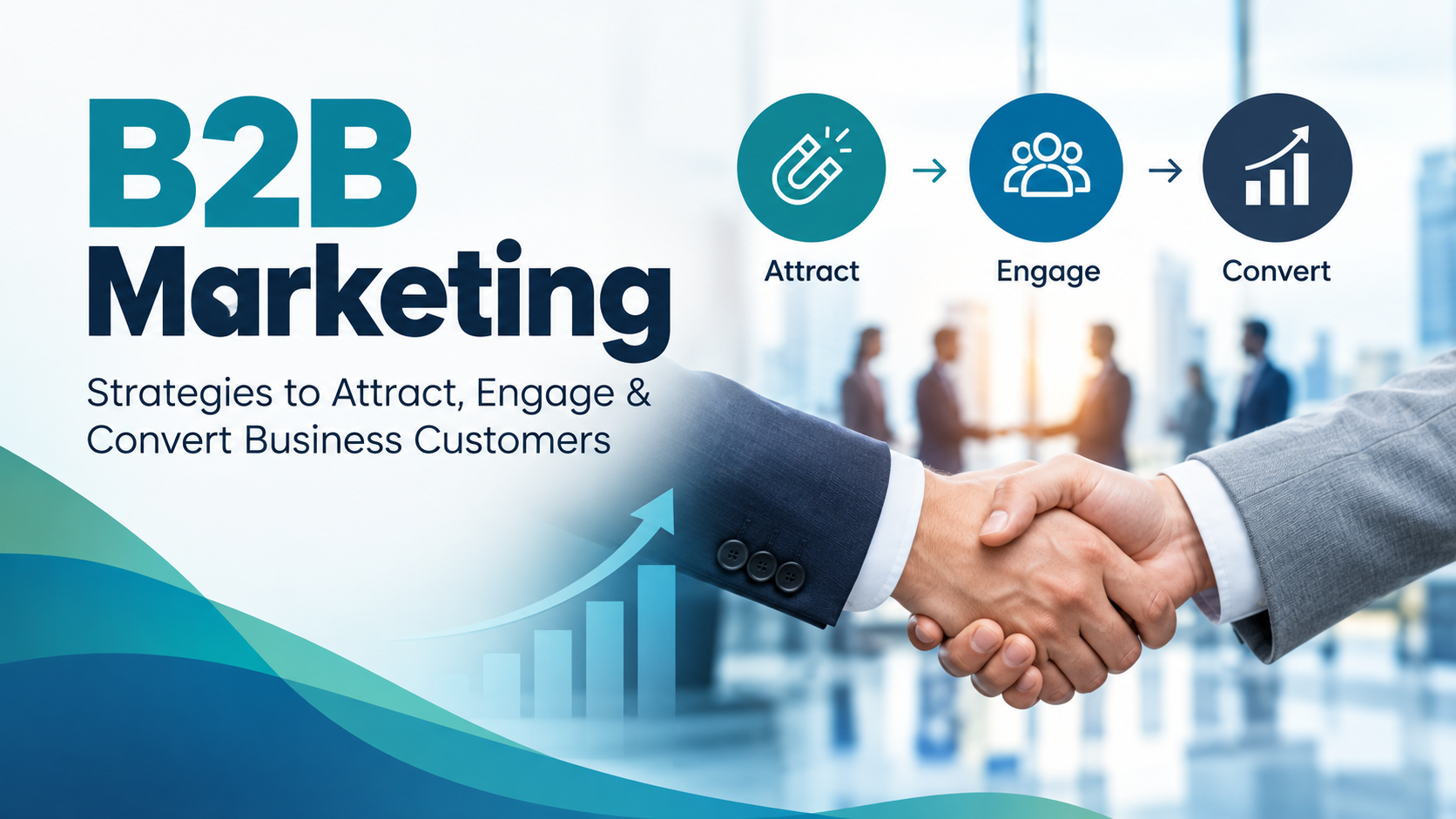
Build a B2B Marketing Funnel
Effective B2B marketing should support customers throughout their buying journey.
At the awareness stage, your goal is to introduce your brand and educate potential customers. Blog content, social media and informational searches can work well here.
During the consideration stage, prospects are comparing solutions. Case studies, service pages, guides, testimonials and comparison content can help demonstrate why your company is worth considering.
At the decision stage, prospects need confidence before contacting or purchasing from you. Strong calls to action, demonstrations, consultations, pricing information, reviews and clear evidence of results can help convert interest into action.
This approach creates a connected B2B sales and marketing funnel rather than treating every visitor as someone who is ready to buy.
Measure Your B2B Marketing Performance
Marketing decisions should be based on data rather than assumptions.
Important B2B marketing metrics can include:
- Website traffic
- Organic search visibility
- Qualified leads
- Conversion rate
- Cost per lead
- Customer acquisition cost
- Marketing-qualified leads (MQLs)
- Sales-qualified leads (SQLs)
- Email engagement
- Return on advertising spend (ROAS)
- Customer lifetime value
Tracking these metrics helps identify which channels are producing genuine business opportunities rather than simply generating clicks or impressions.
Common B2B Marketing Mistakes to Avoid
One common mistake is trying to market to everyone. A clearly defined target audience usually produces stronger messaging and better-quality leads.
Another mistake is focusing too heavily on promotional content. B2B customers often need education and evidence before they trust a company.
Poor website experiences can also waste marketing investment. If your advertising or SEO generates traffic but the website is confusing, slow or difficult to navigate, visitors may leave without taking action.
Finally, businesses should avoid judging marketing performance too quickly. Some B2B purchases have long sales cycles, so campaigns need enough time and data to show their real performance.
The Future of B2B Marketing
B2B marketing continues to become more digital, personalised and customer-focused. Search engines, AI-powered search, automation, data analytics and content personalisation are changing how businesses discover and evaluate suppliers.
However, the fundamentals remain the same: understand your audience, solve their problems, communicate clearly and build trust.
Businesses that combine strong digital marketing with useful content, credible expertise and a seamless customer experience are better positioned to compete in crowded B2B markets.
Frequently Asked Questions
What is B2B marketing?
B2B marketing is the process of promoting products or services from one business to another. It uses channels such as SEO, content marketing, email, LinkedIn, paid advertising and sales outreach to attract and convert business customers.
What is the difference between B2B and B2C marketing?
B2B marketing targets businesses and professional decision-makers, while B2C marketing targets individual consumers. B2B purchases often involve longer sales cycles, multiple decision-makers and larger investments.
What are the most effective B2B marketing strategies?
Effective strategies depend on the business and target audience, but SEO, content marketing, LinkedIn marketing, email marketing, paid search and lead nurturing are commonly used to generate and convert B2B leads.
How does SEO help B2B companies?
B2B SEO helps businesses appear in search results when potential customers are researching products, services or solutions. A well-optimised website can attract relevant organic traffic and generate leads over time.
Is LinkedIn important for B2B marketing?
Yes. LinkedIn can be particularly useful for reaching professionals, business owners and decision-makers. Companies can use organic content and paid campaigns to build awareness, demonstrate expertise and generate leads.
How long does B2B marketing take to produce results?
The timeframe varies depending on the strategy, industry and competition. Paid advertising can generate traffic quickly, while SEO and content marketing generally require more time to build authority and consistent organic visibility.
How can I improve my B2B marketing strategy?
Start by defining your ideal customer, understanding their problems and mapping their buying journey. Then create relevant content, optimise your website, choose the right marketing channels and track leads and conversions to identify what is working.
Why is content important in B2B marketing?
Content helps potential customers understand their problems and evaluate possible solutions. Educational content can establish your business as an authority while supporting SEO, lead generation and customer nurturing.