In today’s digital marketplace, potential customers often search online before they ever speak to a salesperson. They compare suppliers, research solutions, read reviews and look for companies they can trust. For businesses selling products or services to other businesses, this makes B2B SEO an important part of building a reliable source of online leads.
B2B SEO, or business-to-business search engine optimisation, helps companies improve their visibility in search engines and reach decision-makers who are actively looking for their products or services. When done properly, it is not simply about ranking for keywords. It is about attracting the right audience and turning search traffic into genuine business opportunities.
What Is B2B SEO?
B2B SEO is the process of optimising a business website so it can appear prominently in search engine results for queries made by other businesses.
Unlike consumer searches, B2B searches often involve more research and a longer buying journey. A potential customer might search for a supplier, compare different companies, investigate technical specifications, read an industry guide and then contact several providers before making a decision.
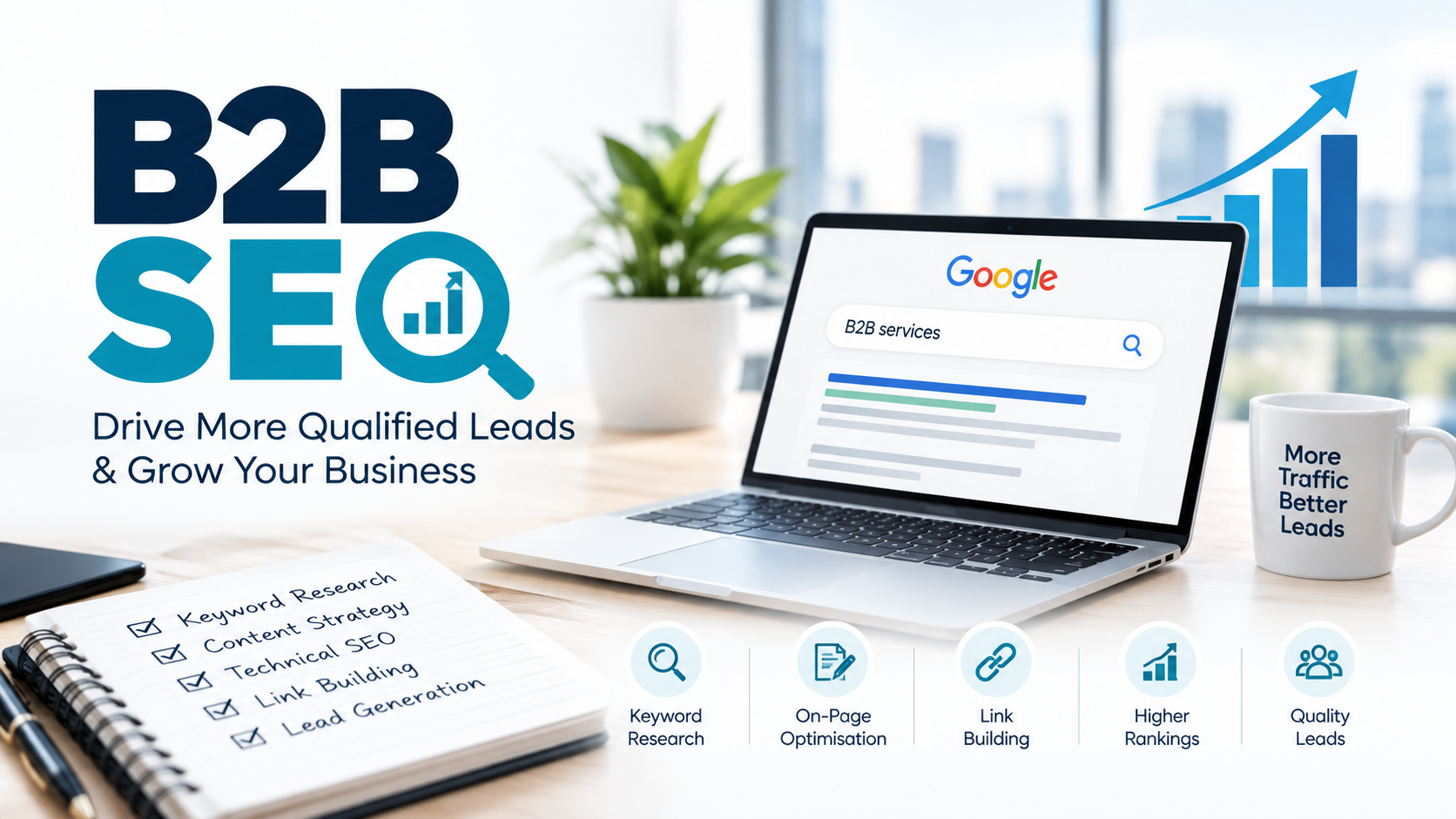
A successful B2B SEO strategy considers this entire journey. It combines keyword research, technical optimisation, useful content, service pages, internal linking, authority building and conversion optimisation to create sustainable organic visibility.
Why Is B2B SEO Important?
Many B2B buyers begin their research with a search engine. If your website does not appear when they search for relevant solutions, your competitors have an opportunity to capture that potential customer.
A well-planned B2B SEO strategy can help your business:
- Increase organic search visibility
- Attract relevant website traffic
- Generate qualified B2B leads
- Build brand authority
- Reach decision-makers earlier in the buying process
- Reduce dependence on paid advertising
- Improve long-term marketing performance
The real value comes from attracting visitors who have a genuine reason to consider your products or services rather than simply increasing traffic numbers.
B2B Keyword Research: Start With Search Intent
Keyword research is one of the foundations of B2B SEO, but choosing keywords simply because they have high search volume can lead to poor results.
B2B businesses should understand search intent and identify what a person is actually trying to accomplish with a search.
For example, informational keywords may include:
- What is B2B SEO?
- How does technical SEO work?
- How to improve website visibility
Commercial keywords can include:
- B2B SEO agency
- B2B SEO services
- Enterprise SEO services
- SEO company for B2B businesses
Transactional or high-intent searches may be even more specific, such as:
- B2B SEO consultant near me
- Industrial SEO services
- SaaS SEO agency
A strong strategy usually combines informational, commercial and transactional keywords so the website can support customers throughout the buying journey.
Create Content That Answers Real Business Questions
Content is a major part of modern B2B SEO. However, publishing hundreds of generic articles is not necessarily an effective strategy.
The best B2B content addresses questions your potential customers genuinely have.
Depending on the industry, useful content could include:
- Detailed service guides
- Industry-specific articles
- Product comparisons
- Buying guides
- Case studies
- Technical explanations
- Frequently asked questions
- Industry trends and insights
For example, a manufacturer could publish an article explaining how to select the right material for a particular application. A software company might create a comparison between different platforms.
This type of content helps search engines understand your expertise while giving potential customers useful information before they contact your sales team.
Optimise Your B2B Service Pages
Service pages are particularly important because they can target commercial search intent.
Instead of having one generic page describing everything your company does, consider creating focused pages for important services, products, industries or locations.
Each page should clearly explain:
- What the service or product is
- Who it is designed for
- The problems it solves
- Key benefits and features
- Your experience or expertise
- Why customers should choose your company
- Frequently asked questions
- A clear next step or call to action
This creates stronger topical relevance and gives search engines clearer signals about the subjects your website covers.
Technical SEO Matters
Even excellent content can struggle if a website has technical problems.
Technical B2B SEO focuses on making the website easy for search engines to crawl, understand and index.
Important areas include:
- Website speed and Core Web Vitals
- Mobile usability
- XML sitemap
- Robots.txt configuration
- HTTPS security
- Canonical URLs
- Indexation
- Broken links
- Redirects
- Structured data
- Website architecture
A clean technical foundation allows your content and authority-building efforts to perform more effectively.
Build Topical Authority
B2B buyers want to work with companies that demonstrate expertise. Search engines also need to understand the subjects a website is genuinely knowledgeable about.
This is where topical authority becomes valuable.
Rather than publishing unrelated articles, create groups of content around important topics within your industry. A main service page can be supported by several detailed articles answering related questions.
For example, a B2B digital marketing website could build a content cluster around SEO with pages covering:
- B2B SEO
- Technical SEO
- Keyword research
- On-page SEO
- Content marketing
- Link building
- Local SEO
- SEO reporting
Internal links between these pages help users navigate the website while giving search engines additional context about the relationship between topics.
Link Building for B2B Websites
Backlinks remain an important part of building website authority, but quality matters more than simply collecting large numbers of links.
B2B companies can build authority through:
- Industry publications
- Relevant business directories
- Guest contributions
- Digital PR
- Expert interviews
- Partnerships
- Original research
- Valuable industry resources
The strongest backlinks are relevant and earned because the content provides genuine value.
Optimise for Leads, Not Just Rankings
Ranking on Google is useful, but rankings alone do not generate revenue.
A B2B website should make it easy for visitors to take the next step. Depending on your business model, this could mean requesting a quote, booking a consultation, submitting an enquiry or contacting the sales team.
Strong calls to action, clear contact information, trust signals, testimonials, case studies and simple enquiry forms can help turn organic visitors into qualified leads.
This is why B2B SEO and conversion rate optimisation should work together.
Measure B2B SEO Performance
SEO should be measured using business outcomes rather than rankings alone.
Important metrics include:
- Organic traffic
- Keyword visibility
- Search impressions
- Click-through rate
- Organic conversions
- Qualified leads
- Contact form submissions
- Phone enquiries
- Cost per lead
- Conversion rate
Google Search Console and Google Analytics can provide valuable data about how users discover and interact with your website.
Over time, this information helps identify which pages, keywords and content topics are producing the most valuable results.
B2B SEO Is a Long-Term Growth Strategy
Unlike paid advertising, where traffic generally stops when the budget stops, SEO can continue generating organic visibility after content and authority have been established.
That does not mean SEO is an overnight solution. Competitive B2B keywords can take time to gain visibility, particularly for newer websites or industries with established competitors.
The businesses that tend to benefit most are those that consistently improve their technical SEO, publish genuinely useful content, build authority and monitor performance.
Frequently Asked Questions
What is B2B SEO?
B2B SEO is the process of optimising a business website to improve its visibility in search engines and attract potential business customers searching for relevant products, services or solutions.
How is B2B SEO different from B2C SEO?
B2B SEO generally targets professional buyers and decision-makers, while B2C SEO targets individual consumers. B2B buying journeys are often longer and may involve multiple stakeholders, so content needs to support research, comparison and decision-making.
What are the most important B2B SEO strategies?
Important strategies include keyword research, technical SEO, content marketing, service-page optimisation, internal linking, topical authority, link building and conversion rate optimisation.
How long does B2B SEO take to work?
The timeframe depends on factors such as website authority, competition, technical health, content quality and keyword difficulty. Some improvements can appear relatively quickly, while competitive keywords may require several months of consistent SEO work.
Can B2B SEO generate leads?
Yes. B2B SEO can generate qualified leads by placing your business in front of people actively searching for relevant products and services. The website also needs strong content, trust signals and clear calls to action to convert that traffic.
Is content marketing important for B2B SEO?
Yes. Useful content helps answer customer questions, demonstrate expertise, target relevant search queries and build topical authority. It can also support prospects throughout different stages of the B2B buying journey.
What keywords should a B2B company target?
A B2B company should target a combination of informational, commercial and transactional keywords that match its products, services, industries and customers. Search intent is generally more important than focusing only on search volume.
How can I improve my B2B SEO strategy?
Start with a technical SEO audit and keyword research. Then optimise important service pages, develop useful content around your core topics, strengthen internal linking, earn relevant backlinks and track organic leads and conversions.
Is B2B SEO worth the investment?
For businesses that rely on online discovery, B2B SEO can be a valuable long-term investment. It can increase organic visibility, build credibility and create a consistent source of qualified website traffic and leads.