In today’s digital world, your website is more than just an online presence—it’s the foundation of your brand, your most valuable marketing asset, and often the first impression potential customers have of your business. Whether you’re a startup, a local business, or an established enterprise, having a modern, fast, and user-friendly website is essential for attracting customers and driving business growth.
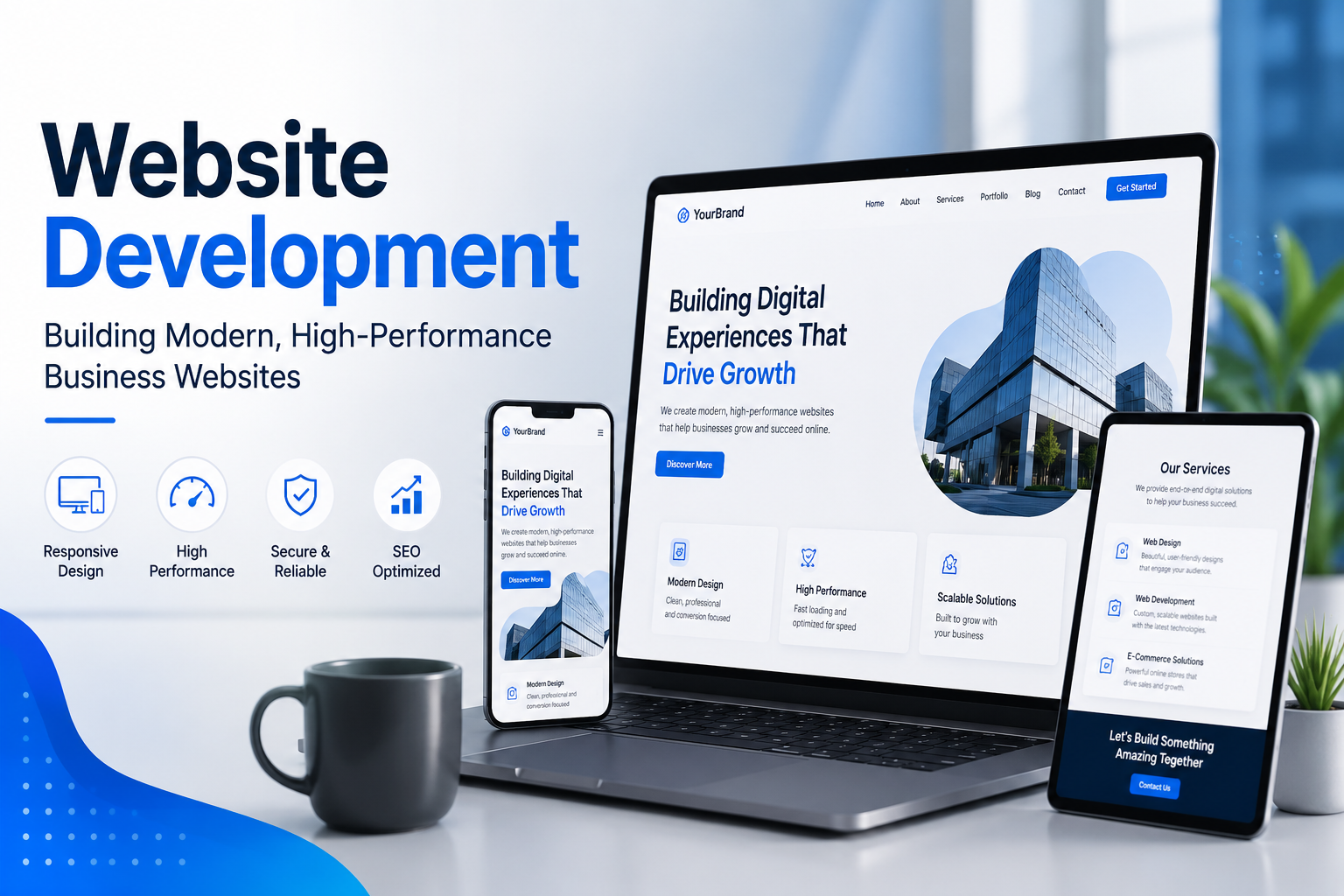
At X Marketer Pro, we specialize in building high-performance business websites that combine stunning design, seamless functionality, and search engine optimization to help businesses succeed online. Our websites are designed to engage visitors, improve conversions, and deliver an exceptional user experience across all devices.
Why Website Development Matters
A professionally developed website does much more than display information. It acts as your digital storefront, available 24/7 to showcase your products, services, and expertise.
A well-developed website helps businesses:
- Build credibility and trust
- Increase online visibility
- Generate quality leads
- Improve customer engagement
- Boost sales and conversions
- Strengthen brand identity
- Support long-term business growth
Customers often judge a business within seconds of visiting its website. A slow, outdated, or confusing website can cause visitors to leave before they even learn about your services.
Features of a Modern Business Website
Modern websites are built with both users and search engines in mind. At X Marketer Pro, every website includes the features businesses need to compete in today’s digital marketplace.
Responsive Design
More than half of all web traffic comes from mobile devices. Your website should automatically adapt to desktops, tablets, and smartphones while maintaining a consistent and professional appearance.
A responsive website ensures users enjoy a smooth browsing experience regardless of the device they use.
Fast Loading Speed
Website speed directly affects user satisfaction and search engine rankings.
Our development process focuses on:
- Optimized images
- Clean code
- Fast hosting compatibility
- Browser caching
- Performance optimization
- Lightweight page structures
Fast websites reduce bounce rates and improve conversion rates.
SEO-Friendly Development
Search engine optimization begins during website development—not after the website is completed.
Our SEO-friendly websites include:
- Clean URL structures
- Proper heading hierarchy
- Optimized metadata
- Internal linking
- Mobile optimization
- Schema-ready architecture
- Image optimization
- Technical SEO best practices
This helps your website become more visible on search engines like Google.
User Experience Comes First
An attractive design alone isn’t enough.
Visitors should be able to easily navigate your website, find information quickly, and take action without confusion.
We focus on:
- Simple navigation
- Clear call-to-action buttons
- Logical page layouts
- Easy-to-read typography
- Professional visuals
- Accessible content
Every element is designed to improve the overall user experience.
Custom Website Development
Every business has unique goals, which is why we create websites tailored to your specific needs rather than relying on generic templates.
Our custom development services include:
- Corporate websites
- Business websites
- Landing pages
- Portfolio websites
- Service-based websites
- E-commerce stores
- Custom WordPress development
Each project is built to reflect your brand identity while supporting your marketing objectives.
Website Security
Security is essential for protecting customer data and maintaining trust.
Our websites are developed with security best practices, including:
- SSL integration
- Secure login systems
- Malware protection
- Regular software updates
- Backup solutions
- Secure coding standards
A secure website helps protect both your business and your customers.
Conversion-Focused Development
A beautiful website should also generate results.
We design every page with conversion optimization in mind by including:
- Strategic call-to-action buttons
- Contact forms
- Quote request forms
- Trust signals
- Client testimonials
- Service highlights
- Easy navigation
- Optimized landing pages
These elements encourage visitors to become customers.
Content Management Made Easy
Managing your website shouldn’t require technical expertise.
We develop websites using user-friendly content management systems such as WordPress, allowing business owners to:
- Publish blog posts
- Update content
- Upload images
- Add new pages
- Manage products
- Edit contact information
This gives you complete control over your website.
Ongoing Website Maintenance
Launching a website is only the beginning.
Regular maintenance ensures your website remains secure, fast, and fully functional.
Our maintenance services include:
- Software updates
- Plugin management
- Security monitoring
- Performance optimization
- Bug fixes
- Regular backups
- Technical support
This keeps your website performing at its best year-round.
Why Choose X Marketer Pro?
At X Marketer Pro, we believe every business deserves a website that delivers measurable results.
Our experienced team combines creativity, technical expertise, and digital marketing knowledge to build websites that are both visually impressive and highly effective.
When you partner with us, you receive:
- Custom website design
- Mobile-responsive development
- SEO-ready architecture
- Fast-loading pages
- Secure development
- Conversion-focused layouts
- Ongoing technical support
- Transparent communication
- Scalable solutions for future growth
We don’t just build websites—we create digital experiences that help businesses attract more customers and grow with confidence.
Future-Proof Your Business Website
Technology and customer expectations continue to evolve. A modern website should be scalable, flexible, and ready for future updates.
Whether you’re expanding your services, launching new products, or entering new markets, your website should grow alongside your business.
Our development approach ensures your website remains adaptable while maintaining excellent performance.
Conclusion
A professionally developed website is one of the smartest investments a business can make. It strengthens your online presence, improves customer trust, increases visibility in search engines, and generates more opportunities for growth.
At X Marketer Pro, we build modern, high-performance business websites that combine exceptional design, technical excellence, and digital marketing expertise. Whether you need a brand-new website or want to upgrade your existing one, our team is ready to help you create a powerful online presence that delivers lasting results.
If you’re ready to take your business to the next level, contact X Marketer Pro today and let us build a website designed for performance, growth, and long-term success.